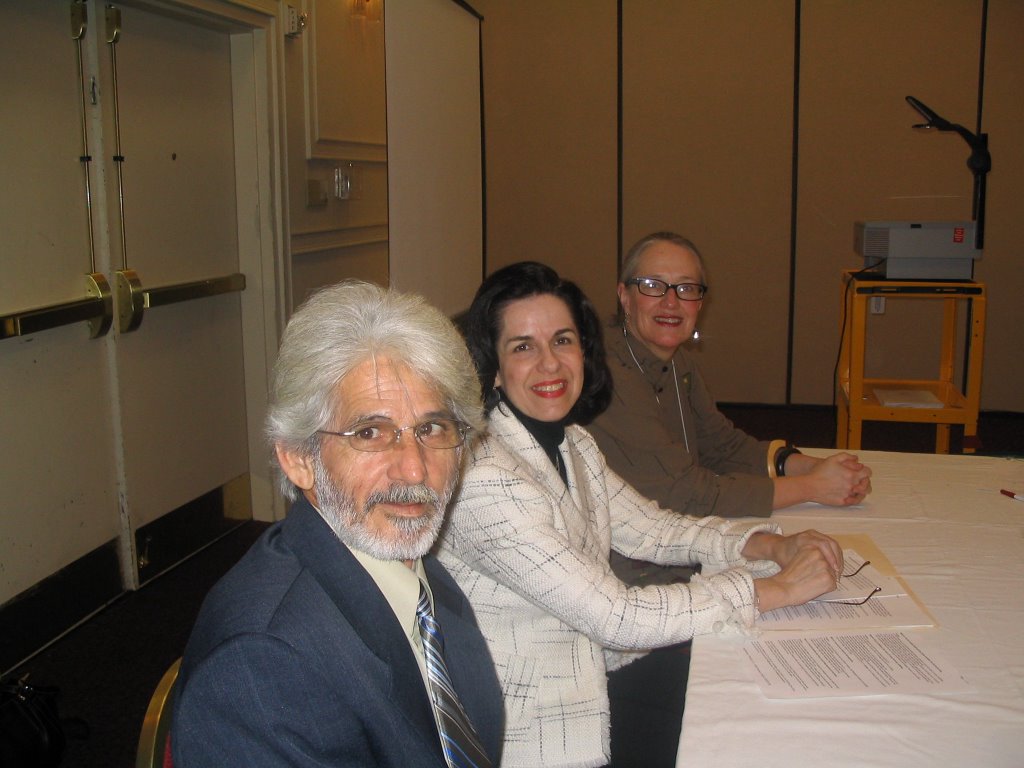
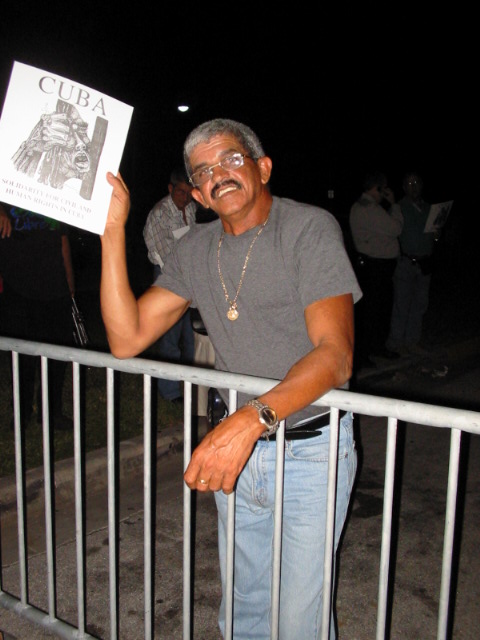
(In this photo, Coalition of Cuban-American Women member, Tanya Wilder, stands by Cuban political prisoner, Israel Abreu. Congressional Representative Ileana Ros-Lehtinen, center, was one of nine representatives who sponsored the congressional luncheon. The other folks in the photo are Cubans who came to the luncheon from various part of the country. )
The text of Tanya Wilder's speech...
Good afternoon….
I am honored to be here today as a representative of The Coalition of Cuban-American Women to address human rights violations, particularly violations suffered by women in Cuba. These women are currently best represented by the ongoing struggle, determination and persistence of Las Damas de Blanco, the Ladies in White, winners of the distinguished Sakharov Prize for Freedom of Thought in 2005.
I am honored to be here today as a representative of The Coalition of Cuban-American Women to address human rights violations, particularly violations suffered by women in Cuba. These women are currently best represented by the ongoing struggle, determination and persistence of Las Damas de Blanco, the Ladies in White, winners of the distinguished Sakharov Prize for Freedom of Thought in 2005.
As stated in the recently released (2008) Annual Report of the Inter-American Commission on Human Rights, “Cuba is the only country in the Hemisphere where it can be stated categorically that there is no freedom of expression.” Anyone who dissents or denounces human rights abuses in Cuba, be they journalists, laborers, teachers, or grass roots activists, does so at great risk. Human rights defenders frequently suffer acts of repudiation, that is, acts of violence directed at them and their families in retaliation for their involvement in human rights advocacy and peaceful opposition of the Cuban government.
Documented accounts over the past 50 years in video, print media, academic research and personal testimonies validate executions, tortures, arbitrary arrests, beatings, public humiliation and psychological abuse. Unfortunately, recent shifts in leadership on the island have not represented any level of improvement in direct or indirect repression toward the dissident community or Cuban political prisoners, who suffer degrading, sub-human, conditions and treatment in Cuban jails across the island.
Women human rights defenders on the island are especially vulnerable to hostility and reprisals. Just day before yesterday, May 11th, Directorio Democrático released an unedited video taken on May 5th, fewer than ten days ago, that shows premeditated aggression on the part of the Cuban government against three non-violent human rights activists in Cuba. In the video, captured in Placetas, Villa Clara, three members of the Rosa Parks Women’s Movement for Civil Rights are approached on the street, beaten and removed from the sight of the cameras by uniformed officials and State Security. These women, who were en route to the home of opposition leader, Jorge Luis García Pérez (Antúnez), were dragged through the streets, and suffered contusions to the face and blows inflicted to the ribs. According to reports, the activists were taken to another street, beaten and thrown up against patrol cars, where they were held in place with simulated strangulation and immobilization techniques and subsequently placed in jail for three hours.
Like these three women, others who summon the courage to campaign on behalf of human rights are regularly targeted by governmental agencies, (State Security, the Committee in Defense of the Revolution, and the Rapid Response Brigade). Similarly, they are often attacked by “turbas,” groups of citizens organized in the spirit of a mob mentality and abetted by one of the aforementioned agencies. However, despite pressure and intimidation imposed upon them from the totalitarian regime in Cuba, the voices of women who defend human rights in Cuba –professional as well common working women…all mothers, daughters, wives and sisters -- effectively advance the rights of all people on the island by challenging inequality, injustice, and governmental repression” on the island.
Take, for example, the case of Cuban poet, María Elena Cruz Varela. “On November 21, 1991, her friends were coerced by the Brigadas de Acción in order to make Maria Elena open door to her dwelling. When she did, she was pushed, face first, into the wall, her arms pinned behind her. Her intruders dragged her down the stairs and into the street. In public view, the Brigadas de Accion “rammed a manifesto she had written to protest the 31st anniversary of the Cuban Revolution down her throat.” In an interview in The American Poetry Review (1995), Maria Elena described how she was “made to kneel in the street.” She had clenched her teeth and refused to open her mouth until she could taste her own blood and could see it flow on the ground before her. But as her accusers cursed and beat her, she remained silent. Six days after her arrest, a closed trial was held, the officials charged her for ‘illegal association.’ and she was sentenced to prison. Stories of her subsequent imprisonment, interspersed with her cellmates' stories, would later find their way into her poems. (American Poetry Review, The , July, 1995: Cruz-Bernal, Mairym http://findarticles.com/p/articles/mi_qa3692/is_199507/ai_n8713749/
In the voices of the Ladies in White, one hears similar stories. Las Damas de Blanco speak out tirelessly on behalf of their sons, husbands, brothers, and fathers who were arbitrarily arrested, tried without legal representation and subsequently imprisoned during the wave of repression known as the Black Spring in Cuba, in March, 2003.
In an interview recorded in July, 2008, Mercedes Elías, the wife of political prisoner, Jesús Mustafa Felipe, tells how her family suffered two acts of repudiation in which elementary and high school children were recruited to participate with the Committee in Defense of the Revolution. “They were all at my house along with State Security and the CDR. Since people in my neighborhood are good folks and sympathize with our cause, State Security goes to other neighborhoods and brings in students and people who are drunk, people who are low class citizens, for the acts of repudiation. They surround our house and shout that we’re antisocial people, that we want to place bombs all about…The method they use is to try to convince people we are going to put bombs in schools to hurt and kill children…”
In April, 2008, Noelia Pedraza Jiménez, wife of political prisoner and prisoner of conscience, Ariel Sigler Amaya wrote, “If I got started, I could go on forever. I’ve been a victim of various acts of repudiation organized by State Security….There have been insults, arrests and threats, but the most terrible incident occurred in 2006, when (State Security) threw my six-year old son into the river, leaving him to drown. I reported the incident as attempted murder. A policeman came to my house but didn’t pay any attention to me. It isn’t just. It isn’t fair for a child to have to suffer this sort of hate crime. I also had a child who died when he was 9 years old, and these people never fail to mention him and insult him …."
And finally, we hear the noble voice of Mrs. Gloria Amaya, the 80-year old mother of three political prisoners, two of whom remain in Cuban jails. Threatened with death, she lives in a constant state of fear. “State Security fractured one of my grandson’s skull, and they beat up another one with an electric cable…When my sons were arrested, they beat me as well and fractured my spine…That’s why I’m confined to a wheel chair now…But one day I went to walk with las Damas…They took me in my wheelchair to the church, and it was a great pleasure to be there with them…I hope I can return, but my legs fail me now and I can’t walk alone anymore…But this is what I tell my sons..’ Hold your head high and keep it high, just like your mother does…”
These accounts, and multitudes like them, are on record, but those of many other women across Cuba whose stories match them in poignancy and courage have yet to be chronicled.
The Universal Declaration of Human Rights, to which Cuba is a signatory, ensures that “everyone has the right to life, liberty and security of person.” Among other basic human rights, the declaration also delineates that: 1) “no one shall be subjected to torture or to cruel, inhumane or degrading treatment or punishment; “2) that “everyone has the right to freedom of opinion and expression;” and 3) that “no one shall be subjected to arbitrary interference with his privacy, family, home or correspondence, nor to attacks upon his honor and reputation.” However, the recently issued (2008) Annual Report of the Inter-American Commission on Human Rights expresses “its concern for the difficult situation faced by organizations to inform the international community about the situation of human rights in Cuba because of potential reprisals…Likewise, the Commission is particularly concerned that defenders may be the target of a campaign to discredit them in response to their work in defending and promoting human rights in Cuba. The Inter-American Commission reiterates the need to adopt necessary measures to prevent the various State bodies from being used to harass people who work in the defense and promotion of human rights.” Similar concern and recommendations have been expressed by internationally regarded organizations such as The International Red Cross, Amnesty International, Christian Solidarity Worldwide, Reporters without Borders, and Physicians for Human Rights, to mention a few.
As an American whose heart belongs to Cuba and her people, it is indeed a great honor and privilege to acknowledge the courageous work of las Damas de Blanco and all human rights defenders in Cuba, as well as those in this country and around the world who denounce basic human rights violations for all Cubans. I am committed to continue to disseminate information about human rights violations in Cuban until there is not further need to do so. When my children ask me who my heroes are, I tell them stories from my work with Cuban political prisoners and courageous women like my colleague in human rights, Laida Carro, Bertha Antúnez, and the other Damas de Blanco. The Cuban people are my heroes, for in my estimation, they truly represent the epitome of courage and dignity.
In closing, I leave you with the words of perhaps Cuba’s most famous sons, José Martí. I find great inspiration in this quotation every day as I work to disseminate information through the The Coalition of Cuban-American Women’s blog.
Martí wrote, "The campaigns of the people are weak only when the hearts of women are not recruited to carry them out. But when women step in and help, when the naturally shy and quiet woman stands up and applauds, when the cultured and virtuous woman annoints the task with the sweetness of her affection, the campaign becomes invincible."
Thank you very much…..


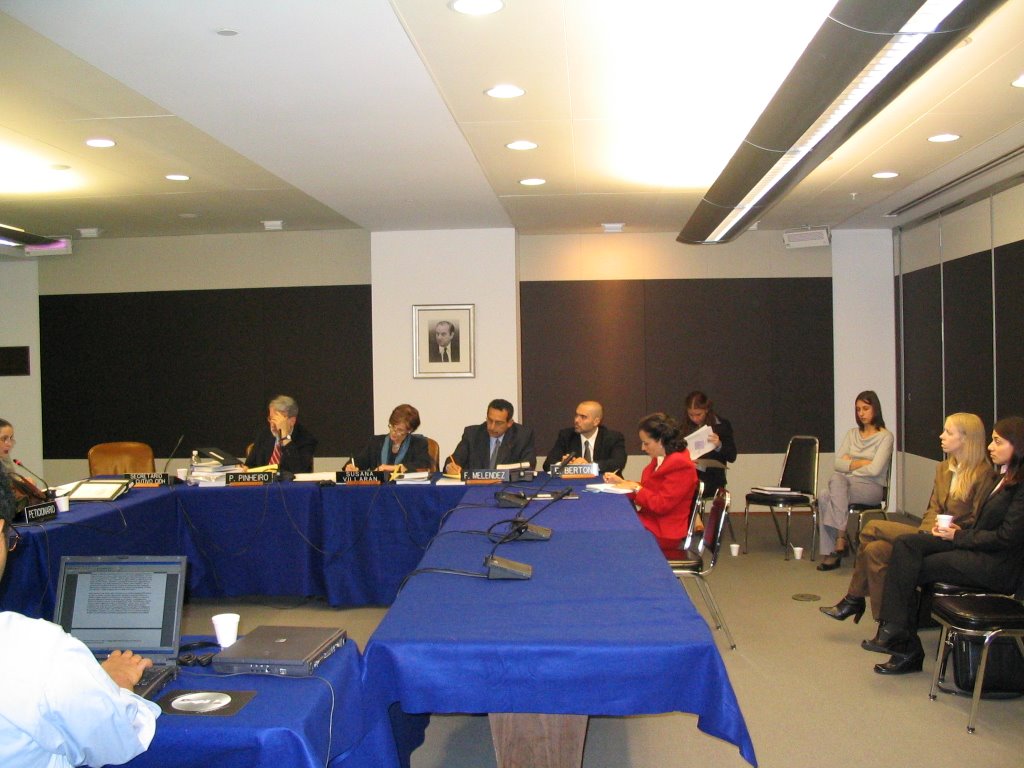
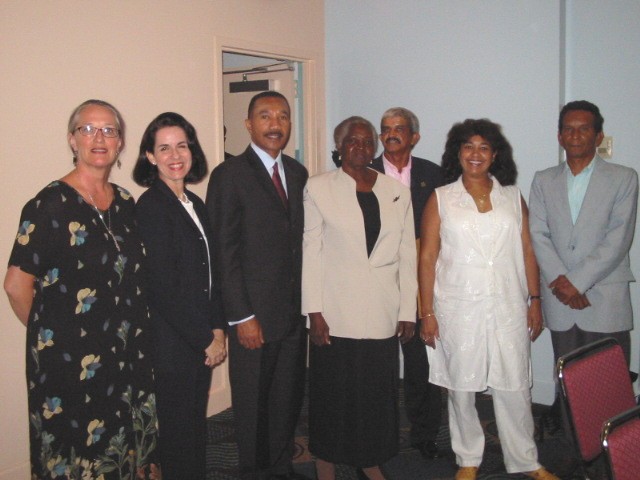
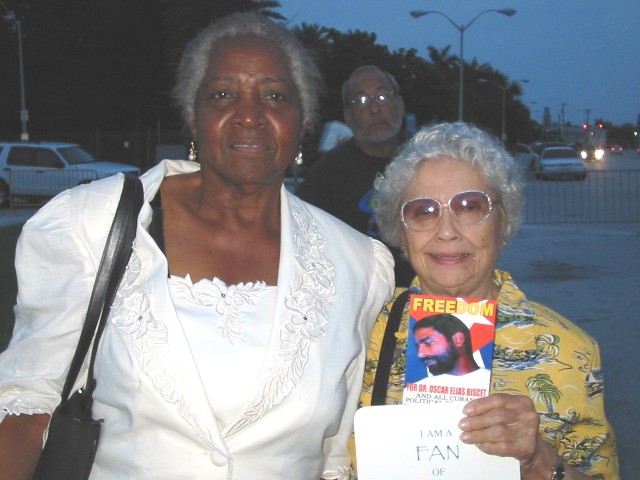
 (ABOVE : Photo # 1: {left to right} Tanya Wilder, Laida Carro, Kwesi Mfume, María Luisa Abreu, Rodolfo Rodríguez San Román, Berta Mexidor, José Bridón / Photo #2: María Luisa Abreu, Manuela Calvo / Photo # 3: Rodolfo Rodríguez San Román, ex-political prisoner)